Veterans transitioning to the civilian workforce face a rapidly shifting economic landscape. The core competencies developed during military service leadership under pressure, adaptability, and strategic problem-solving remain highly sought after by employers. However, the tools required to execute these skills are changing. Artificial intelligence is quickly becoming a baseline requirement across major economic sectors.
By 2026, basic AI literacy will be an expected competency for management and operational roles. Companies are moving beyond the experimental phase of machine learning and are actively deploying these systems to handle daily operations. They need leaders who can manage both human teams and automated workflows. Veterans who understand how to leverage these modern technologies are positioning themselves for incredibly lucrative and stable careers.
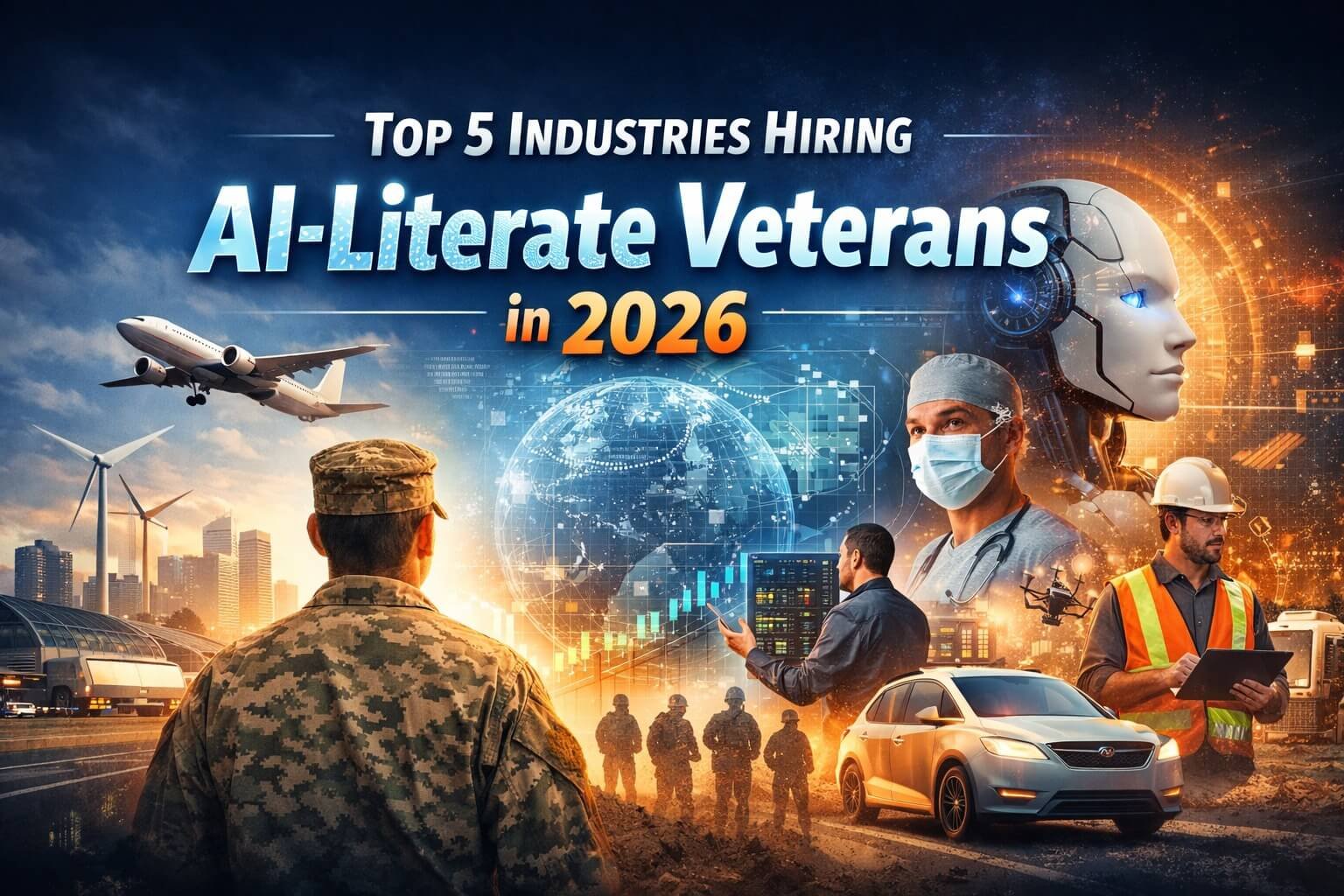
The combination of military discipline and AI proficiency creates a unique candidate profile. Employers know that a veteran can handle the operational rigor of implementing new systems while maintaining security and efficiency. Below are the top five industries actively seeking AI-literate veterans, along with the specific roles and technologies driving this demand.
Cybersecurity and Defense Technology
The defense sector and private cybersecurity firms are naturally drawn to veterans. They already possess the necessary security clearances and understand the gravity of national and corporate security. Adding AI literacy to this foundation makes a candidate exceptionally valuable.
Threat Detection and Automation
Cyber threats are becoming faster and more sophisticated, often utilizing machine learning to bypass traditional firewalls. To counter this, cybersecurity teams use AI to monitor network traffic, identify anomalies, and deploy automated responses to neutralize threats before they cause damage. Veterans familiar with automated threat detection systems can lead these rapid-response units. They bring a tactical mindset to digital warfare, organizing automated defenses just as they would physical perimeters.
Why Veterans Excel Here
Military training emphasizes threat assessment and incident response. Veterans know how to stay calm when systems are compromised. When you pair this level-headedness with an understanding of AI-driven security protocols, you get a leader who can manage high-stakes digital crises effectively.
Healthcare and Medical Technology
The healthcare industry is undergoing a massive digital transformation. Hospitals, research facilities, and insurance companies are investing heavily in automation to reduce costs and improve patient outcomes. They need operations managers and IT directors who can implement these tools without disrupting critical care.
AI in Patient Care and Administration
Machine learning algorithms are now used to predict patient admission rates, manage staffing schedules, and even assist in diagnosing medical imaging. On the administrative side, automated workflows handle billing, insurance verification, and records management. This reduces the administrative burden on doctors and nurses, allowing them to focus entirely on patient care.
The Veteran Advantage
Healthcare logistics require absolute precision. A single failure in the supply chain or scheduling system can have severe consequences. Veterans are accustomed to operating in environments where precision is a matter of life and death. Their ability to enforce standard operating procedures makes them ideal candidates for overseeing the rollout of AI healthcare systems.
Supply Chain and Logistics
Global supply chains are incredibly complex networks that require constant optimization. The disruptions of the past few years forced major retailers and logistics companies to upgrade their tracking and forecasting technologies. AI is now the backbone of modern global trade.
Predictive Analytics and Route Optimization
Logistics companies use AI to predict weather patterns, analyze port congestion, and optimize delivery routes in real-time. Automated inventory management systems predict when a warehouse will run out of specific goods and automatically place orders to restock. Fleet managers use machine learning to schedule preventative maintenance on trucks and cargo ships, reducing downtime.
Military Logistics Translates to Corporate Success
Moving troops, equipment, and supplies across the globe is one of the military’s core functions. Veterans with logistics experience already understand the fundamentals of supply chain management. When these veterans learn how to use AI-driven forecasting tools, they become highly effective supply chain directors. They know how to interpret the data provided by the AI and make strategic decisions to keep goods moving efficiently.
Financial Services and Fintech
Banks, investment firms, and insurance companies rely on massive datasets to generate revenue and manage risk. The financial sector is heavily regulated and requires strict compliance, making it a perfect fit for the disciplined nature of military veterans.
Fraud Prevention and Algorithmic Trading
Financial institutions deploy AI models to monitor millions of transactions per second, flagging fraudulent activity instantly. Wealth management firms use algorithmic trading to execute thousands of trades based on micro-market fluctuations. Customer service in banking is also heavily automated, with intelligent chatbots handling routine inquiries and routing complex issues to human agents.
Security and Compliance Expertise
Veterans bring a strong sense of integrity and a deep respect for regulatory compliance to the financial sector. They excel in risk management roles, where they oversee AI systems designed to keep the institution compliant with federal laws. Their ability to follow strict protocols ensures that automated financial systems operate within legal boundaries.
Advanced Manufacturing and Robotics
Manufacturing is no longer about manual assembly lines. Today’s factories are highly technical environments filled with robotics, sensors, and intelligent software. The industry is facing a massive shortage of leaders who understand both the physical machinery and the digital systems that control them.
Smart Factories and Predictive Maintenance
Modern manufacturing plants use AI to monitor the health of their machinery. Sensors collect data on vibration, temperature, and output speed, feeding this information into machine learning models. The AI predicts exactly when a machine is likely to fail, allowing maintenance teams to fix the issue before it halts production. Automated quality control systems use computer vision to inspect products for microscopic defects faster than the human eye.
Leading Humans and Machines
Veterans are perfectly suited for plant management and operations roles in advanced manufacturing. They know how to lead teams of technicians and operators. By understanding how AI coordinates the factory floor, a veteran can optimize production schedules, manage automated workflows, and ensure a safe working environment for the human workforce.
Preparing for the AI-Driven Job Market
Understanding these industries is only the first step. Veterans looking to capitalize on these opportunities must actively build their technical vocabulary and practical skills. You do not need a computer science degree to be AI-literate. Employers are primarily looking for individuals who know how to use AI tools to solve business problems.
Upskilling and Certifications
Numerous organizations offer programs specifically designed to help veterans transition into the tech industry. Earning certifications in cloud computing, data analytics, or AI implementation provides tangible proof of your technical competence. Focus on understanding how data flows through an organization and how automation can eliminate bottlenecks. Combine these technical certifications with your existing leadership experience to build a highly competitive resume.
Your Next Mission: Leading the Tech Revolution
As more industries actively seek veterans who understand AI tools and automation systems, the ability to combine leadership, discipline, and modern technology skills is becoming a powerful advantage. If your organization wants to integrate smarter automation, AI-driven workflows, or intelligent customer engagement systems, the team at G.I 2 A.I Automations can help. We specialize in building practical automation solutions that help businesses operate faster, reduce manual work, and scale with confidence. Connect with G.I 2 A.I Automations today to discover how AI-powered systems can strengthen your operations and future growth.